
Sewer backups are one of the most distressing losses a homeowner can experience. Sewage water carries pathogens, bacteria, and heavy contamination, and it tends to back up at the worst possible times: holidays, when guests are over, in the middle of the night. In Old Louisville, Germantown, Schnitzelburg, Portland, and the older parts of the Highlands and South End, recurrent backups are common and usually trace to a combined sewer overflow event or a failing clay lateral between the house and the city main.
This guide covers why sewage water is a separate category of cleanup under IICRC S500, what to do in the first ten minutes, how to permanently address the underlying lateral, and why the water backup endorsement is the cheapest insurance dollar most older home owners can spend.
Why older Louisville neighborhoods back up
Most of Louisville's urban core is served by a combined sewer system that carries sanitary sewage and stormwater in the same pipes. During heavy rain, the system reaches capacity and pressure pushes contaminated water back up through basement floor drains, laundry standpipes, and the lowest fixtures in the home. MSD has spent over a billion dollars on overflow projects, but combined sewer overflow events still happen, especially in Old Louisville, Germantown, Portland, Butchertown, and Smoketown.
Separate from the city system, homes built before 1980 often have original clay or cast iron sewer laterals running from the house to the city main. Clay joints are prime targets for tree root intrusion from mature silver maples, sycamores, and tulip poplars; cast iron rusts from the inside. Either failure mode causes recurrent backups starting at the lowest fixture in the home.
Why sewage water is a separate category of loss
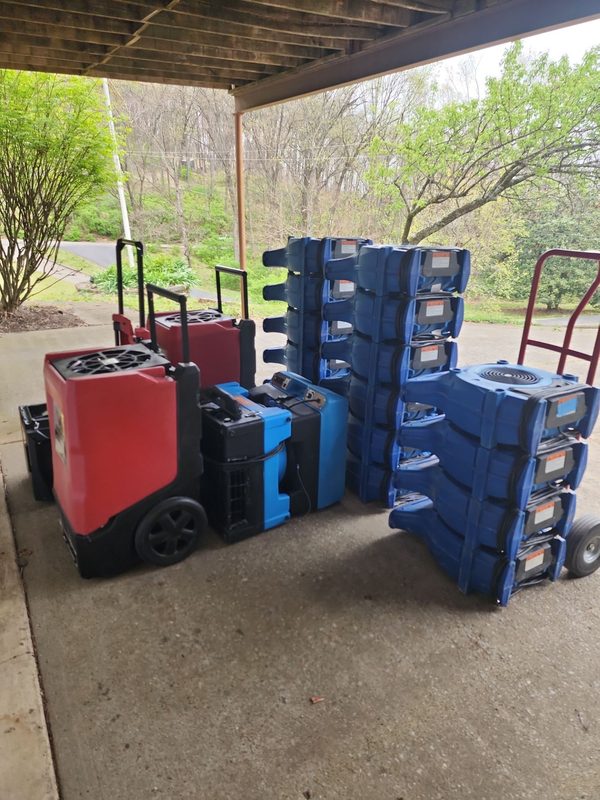
Sewage is Category 3 (black water) under IICRC S500 because it carries pathogens, bacteria, and contaminants. It is not the same job as a clean water leak. Category 3 cleanup requires PPE, containment, removal of all porous materials that contacted the water (carpet, pad, drywall below the wet line, baseboards, particleboard cabinets), hospital grade EPA registered disinfection, and structural drying with continuous monitoring.
First steps when sewage backs up
- Stop using all water in the house immediately, including washing machines, dishwashers, and showers.
- Keep children and pets away from the affected area.
- Open a window if safe; do not run the HVAC, which spreads contaminated air.
- Photograph everything before any cleanup.
- Call a Category 3 certified restoration company. This is not a DIY job under any circumstances.
Long term fixes for the underlying lateral
After cleanup, get a video sewer scope of the lateral. A licensed Kentucky plumber can identify exactly where roots, breaks, or scale are causing the backup. Repair options range from spot repair, to trenchless pipe lining (CIPP), to full lateral replacement. For homes with repeat backups, lining or replacement ends the cycle and is often cheaper than two more cleanups. Backflow preventers on basement floor drains are a smart add-on for any home on the combined sewer system.
Insurance and the backup endorsement
Standard Kentucky homeowner policies do not cover sewer or drain backup damage. You need a separate water backup endorsement, which most carriers offer for roughly $40 to $100 per year. If you live in an older Louisville neighborhood and do not have this endorsement, add it at your next renewal. It is the cheapest insurance dollar most older home owners can spend.
Why Category 3 cleanup is fundamentally different from clean water
Category 3 water under IICRC S500 contains sewage, harmful bacteria (E. coli, salmonella), viruses, and toxigenic mold spores. Cleanup requires full PPE for technicians, plastic containment with negative air pressure, removal of all porous materials that contacted the water (carpet, pad, drywall below the wet line, baseboards, particleboard cabinetry), application of EPA registered hospital grade disinfectants, and structural drying with continuous monitoring.
DIY cleanup with a wet vac and bleach is the textbook setup for lingering bacterial contamination, follow-on mold growth weeks later, and a denied insurance claim. Under most Kentucky policies, the carrier expects you to engage a Category 3 certified contractor immediately; failure to do so is a documented reason for reduced or denied claims.
Trenchless lateral repair as a long term fix
After the cleanup, get a video sewer scope of the lateral. Modern trenchless pipe lining (CIPP, cured in place pipe) installs a new resin liner inside the existing lateral, typically through a single excavation at the cleanout. Cost is usually less than open excavation, the work is done in a day, and the new liner is rated for 50 plus years. For homes with multiple backups, this ends the cycle permanently. Backflow preventers on basement floor drains are a smart add-on for any home on the combined sewer system.
Need professional help with this in Louisville or Jefferson County? Our IICRC-certified crews respond 24/7.
Call (502) 883-5043