
Most newcomers to Louisville do not appreciate how much the city floods until they live through their first spring. The Ohio River, dozens of urban creeks, and an aging combined sewer system all converge to put basements and ground floors underwater in the same neighborhoods almost every year. The 1937 flood remains the historic high water mark, but smaller events that overwhelm MSD's combined sewer or pop a creek out of its banks happen every season.
This guide is the practical version: where Jefferson County actually floods, what to do before the spring storm season, how to act in the first hour after water gets in, and what your insurance does and does not cover. It is written for homeowners from Portland to Prospect, Shively to St. Matthews, and everywhere across the metro that sits near a creek, a low spot, or a known combined sewer overflow.
Why Louisville floods so often
Louisville sits at the only natural break in the Ohio River, the Falls of the Ohio, with most of the older city built on the floodplain behind a federally maintained levee system. Add Beargrass Creek, Mill Creek, Pond Creek, and dozens of smaller tributaries running through dense neighborhoods, and you have a city where two inches of rain in an hour can put basements underwater from Shively to St. Matthews.
MSD operates a large combined sewer system that, during heavy storms, backs up into basements through floor drains and laundry standpipes. Even homes on high ground get water inside this way.
Neighborhoods that flood first
Crews see repeat flooding in the same handful of areas every spring. If you live in one of these, treat flood prep as non-optional.
- Portland, Shawnee, and the Point near the Ohio River floodwall
- Butchertown, Clifton, and Crescent Hill along the Beargrass Creek corridor
- Old Louisville and Germantown where combined sewers back up first
- Shively and Pleasure Ridge Park along Mill Creek
- Okolona and Fern Creek along Pond Creek tributaries
- Older New Albany and Clarksville neighborhoods near Silver Creek
Pre-storm prep: a one afternoon checklist
Most claims we run during spring storm season trace back to two or three preventable conditions. Walk your property once in late February and you will eliminate most realistic risk.
- Test your sump pump and install a battery backup. Power often goes out before the worst of the storm hits.
- Clear gutters, downspouts, and yard drains of leaf litter from the prior fall.
- Confirm grading slopes away from the foundation in all four directions.
- Install backflow preventers on basement floor drains if you are on combined sewer.
- Move stored items off basement floors onto shelving at least 4 inches up.
- Photograph contents room by room and store the file off site (cloud).
What insurance actually covers
This is where many Louisville homeowners get a hard surprise. Standard homeowner policies cover sudden internal water damage like a burst pipe, but they exclude surface water and rising water that comes in from outside. That includes Ohio River flooding, creek overflow, and water that enters through a basement window well during a downpour. You need a separate flood policy (NFIP or private) for those losses.
Sewer backup is also excluded under standard coverage. You need a water backup endorsement (usually $40 to $100 a year) to be covered when MSD's combined system pushes sewage up through your basement drain.
Why fast extraction matters in the Ohio Valley
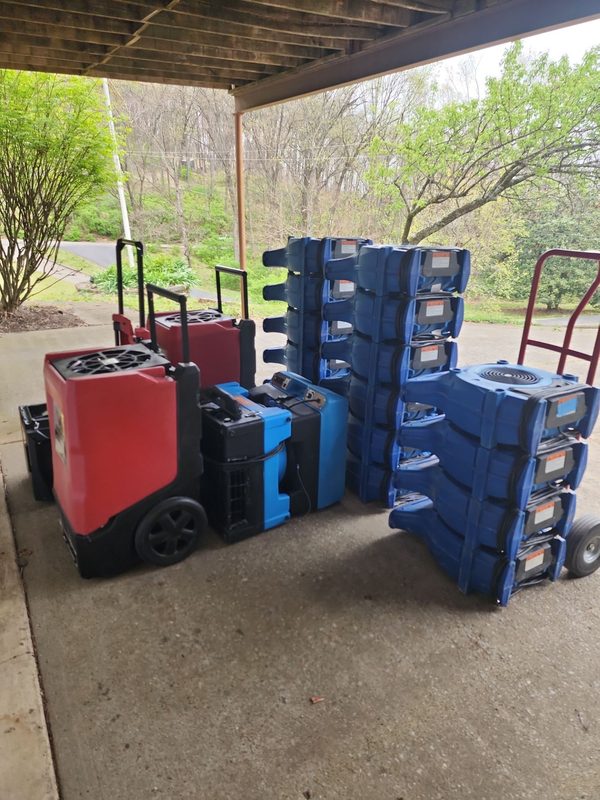
Louisville summers run hot and humid, which makes drying a race. Without commercial dehumidifiers running on day one, mold colonies can begin inside drywall cavities within 24 to 48 hours. Spring and fall basement floods that sit even a single day usually mean removing baseboards, drywall up to the wet line, and any wet insulation.
How the combined sewer system fails during storms
Most of Louisville's urban core is served by a combined sewer that carries both sanitary sewage and stormwater. MSD has invested over a billion dollars in overflow reduction projects, but during heavy rain the system still reaches capacity. When it does, pressure backs up into the lowest fixtures in homes connected to the system: basement floor drains, laundry standpipes, and ground floor showers. Even homes far from any creek can take on contaminated water this way.
If your home is on combined sewer and you have ever seen any backup, install backflow preventers on basement floor drains and add the water backup endorsement to your insurance policy at renewal.
What carriers actually pay for after a flood
The dividing line is whether water came from inside the building (covered) or from outside (excluded). A burst supply line in the kitchen is covered. Creek water that flowed through the back door is not, regardless of how heavy the storm was. Sewer backup is excluded under standard coverage but covered with an endorsement.
If your home has flooded from surface water before, document everything in writing, talk to your agent about NFIP or private flood coverage (private flood policies are now available statewide in Kentucky at reasonable cost), and prepare yourself emotionally for a rough conversation if you only carry standard coverage.
The bottom line
Flooding is the single most common large insurance loss in Jefferson County, and it is largely predictable. If you live in a known flood-prone neighborhood or on combined sewer, prep your home in February, add the right insurance endorsements, and save a 24/7 restoration company in your phone before the season starts. The first hour after water gets in is what decides whether your loss is small or significant.
Flooded after a Louisville storm? Our IICRC certified crews extract, dry, and document for your carrier 24/7.
Call (502) 883-5043