
If you own a Louisville home with a basement, you have almost certainly seen at least a damp wall, an efflorescence stain, or standing water on the floor after a heavy rain. Most older basements in Old Louisville, the Highlands, Crescent Hill, and the South End were built before modern exterior waterproofing was standard, and the high water table in the Ohio Valley means soil pressure is always pushing water toward your foundation.
This guide separates the cosmetic problems you can manage with a dehumidifier from the real failures that demand interior drain tile, exterior excavation, or a structural fix. It also covers the cleanup side when seepage turns into a flooded basement.
Why Louisville basements seep
Most older Louisville basements were built with limestone block, brick, or unreinforced poured concrete walls and no exterior waterproofing membrane. The soil around the foundation absorbs water from rain, snowmelt, and the high water table that comes with living in the Ohio Valley, then pushes that water laterally against the basement wall. Eventually it finds a crack, a mortar joint, or the cove where the wall meets the floor.
Newer homes built since the 1990s usually have exterior drainage and waterproof coating, but they still flood when the drain tile clogs, the sump pump fails, or grading around the house pushes water toward the foundation instead of away.
Common seepage patterns
- Water seeping through a vertical crack in a poured wall (common in 1960s to 1980s builds)
- Water weeping through mortar joints in limestone or brick walls (common in pre-1940 Old Louisville and Crescent Hill homes)
- Water bubbling up at the floor-to-wall cove (almost always a failed footer drain or high water table)
- Water following a pipe penetration through the wall (usually a missed seal at construction)
- Water at the bottom of a window well after a downpour
Quick fixes vs. real fixes
Hydraulic cement plugs in cracks, exterior caulk on window wells, and a dehumidifier in the basement all help in the short term but do not address the water at the source. Real fixes start outside the house: extend downspouts at least six feet from the foundation, regrade soil to slope away on all four sides, add window well covers, and clear any clogged exterior drains. If water is coming through the cove or rising through the floor, the next step is usually interior drain tile with a sump pit and pump, or in severe cases, exterior excavation and waterproofing.
When seepage becomes a restoration job
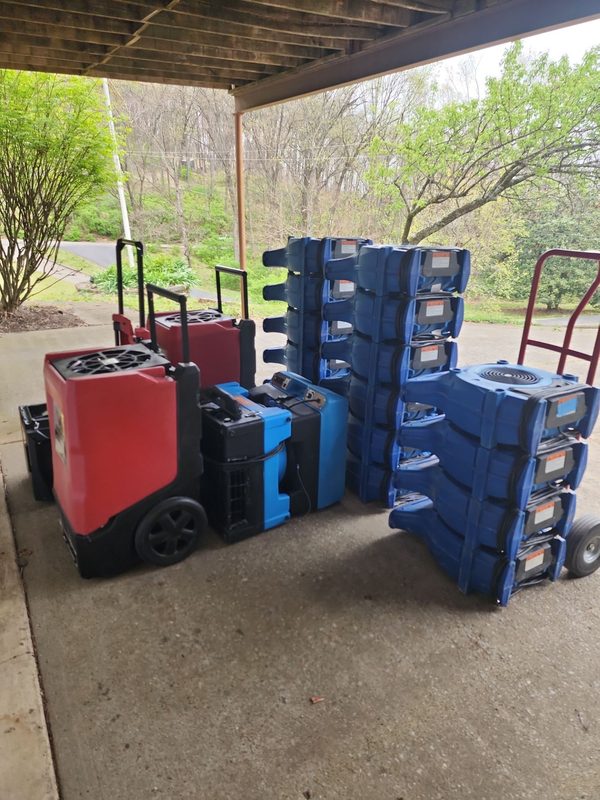
A finished basement that floods even an inch usually needs same-day extraction, removal of wet carpet and pad, removal of baseboards and drywall up to at least 12 inches above the wet line, and structural drying with commercial dehumidifiers. Wet drywall and carpet that sit for more than 48 hours almost always grow mold in Louisville's humidity.
Insurance reality check
Standard Kentucky homeowner policies exclude both ground water (anything that came up through the floor or in through the foundation) and surface water (anything that flowed in). They cover sudden internal failures like a burst pipe. They cover sewer backup only if you added the water backup endorsement. If your basement floods from groundwater, you are almost certainly paying for cleanup out of pocket unless you carry NFIP or private flood coverage.
Why exterior fixes should always come first
Before spending five figures on interior drain tile, walk your property in a heavy rain and watch where water actually goes. Roof runoff that pours onto the ground next to the foundation is the cause of more basement seepage than any other single factor. A $40 downspout extension kit that moves discharge six feet away from the house solves a surprising number of supposedly chronic seepage problems.
When seepage points to a structural issue
Horizontal cracks in poured concrete walls, especially with inward bowing, are not seepage problems. They are soil pressure problems and they need a structural engineer's evaluation before any waterproofing work happens. Lateral pressure from saturated clay soils can collapse a basement wall, and a contractor selling you waterproofing without flagging structural concerns is doing you a disservice.
Need professional help with this in Louisville or Jefferson County? Our IICRC-certified crews respond 24/7.
Call (502) 883-5043