
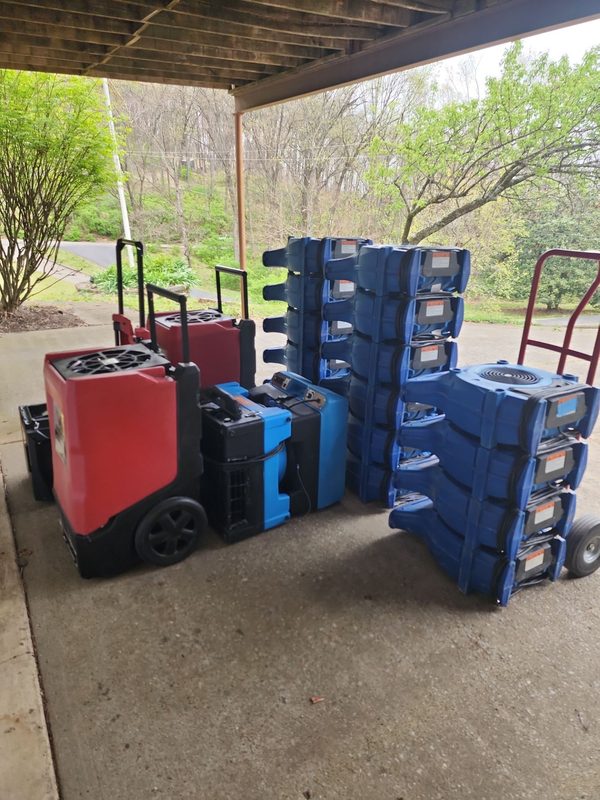
The vast majority of structure fires in Jefferson County start in the kitchen, and most are out within minutes thanks to fast Louisville Fire and suburban department response times. The fire being out, however, is not the end of the loss. The next 24 hours decide whether the smoke spread is contained to the kitchen or fills the whole house, whether your insurance claim moves smoothly or stalls, and whether your family is back home in three weeks or three months.
This guide is built specifically for Louisville homeowners. It covers what to do (and not do) immediately, how Additional Living Expenses coverage actually works, and what proper restoration looks like.
Why kitchen fires cause more smoke than fire damage
Cooking fires (especially grease and oil) produce protein smoke, which is the worst type of smoke residue to clean. It often leaves no visible soot, but the odor is intense and chemically embedded in finishes. A 90 second grease fire that fire crews put out with a single extinguisher can leave smoke film throughout the entire home, including upstairs bedrooms hundreds of feet away.
First steps before you re-enter
Wait for Louisville Fire or your suburban department to clear the home, even after visible flames are out. Modern engineered framing can hide hot spots. Let the fire department shut off utilities; do not flip breakers or open the gas valve yourself.
Open the insurance claim within 24 hours
Call your carrier the same day. Your adjuster will assign a claim number and authorize emergency mitigation: board up, tarping, water extraction from fire department water, contents protection, and securing the property. Most carriers will approve mitigation by phone within an hour.
Save every receipt from this point forward: hotel, food, clothing, pet boarding. Almost all are reimbursable as Additional Living Expenses (ALE) under your policy.
What not to do
- Do not run the HVAC system. It pushes smoke and soot into every duct in the house.
- Do not wipe soot with a wet rag. Soot is acidic; wet wiping drives it deeper into surfaces and multiplies cleanup cost.
- Do not eat food from the kitchen, even sealed packages. Smoke penetrates packaging.
- Do not use a regular vacuum to pick up soot. It blows fine particles back into the air.
- Do not sign anything from a contractor that knocks on your door without verifying their Kentucky license through the Department of Housing, Buildings, and Construction.
What proper restoration looks like
A real fire restoration scope addresses structure, smoke, contents, HVAC, and odor as separate work packages. Skipping any one of them leads to lingering odor that re-emerges in humid weather six months later.
- Structural repair of damaged framing, drywall, and finishes
- HEPA-filtered air scrubbing during cleanup to capture airborne soot
- Soot specific chemistry chosen for the smoke type (dry, wet, or protein)
- HVAC duct cleaning to stop recirculation
- Off-site contents pack out for clothing, electronics, and personal items when scope warrants
- Hydroxyl or thermal fogging for molecular level odor removal
ALE: how temporary lodging works in Louisville
Most Kentucky homeowner policies include Additional Living Expenses coverage that pays the difference between your normal cost of living and what you spend while displaced. For Louisville families that often means a hotel for the first week, then a furnished short term rental in St. Matthews, the Highlands, or East End if reconstruction will take longer. Ask your adjuster early for the daily and total caps on your ALE.
How Additional Living Expenses (ALE) coverage works in Kentucky
Most Kentucky homeowner policies include ALE that pays the difference between your normal cost of living and what you spend while displaced. For Louisville families, that often means a hotel for the first 7 to 14 days while the carrier authorizes longer term housing, then a furnished short term rental in a neighborhood like St. Matthews, the Highlands, Middletown, or J-Town if reconstruction will take more than a month.
Ask your adjuster early for the daily and total caps. Save every receipt, even small ones. Pet boarding, longer commute gas, additional childcare, and laundromat costs all qualify in most policies.
Why protein smoke is the most underestimated category
Protein smoke comes from fires involving meats, fats, and oils, which describes most kitchen fires. It often leaves no visible residue but creates intense, chemically embedded odor in finishes and fabrics. Adjusters who do not recognize protein damage sometimes underscope these claims; experienced restoration estimators always treat a kitchen fire as a whole house event until proven otherwise.
The bottom line
Kitchen fires are chaotic in the moment but follow a predictable recovery sequence: stabilize, document, open the claim, hire qualified IICRC certified restoration, and let ALE handle the family logistics while reconstruction runs. Done in that order, even a serious kitchen fire becomes a stressful but manageable few weeks rather than a months long ordeal.
Need professional help with this in Louisville or Jefferson County? Our IICRC-certified crews respond 24/7.
Call (502) 883-5043